Minggu, 21 Mei 2017
North Korea confirms 'successful' new ballistic missile test

North Korea has confirmed it "successfully" launched another medium-range ballistic missile on Sunday.
The state-run KCNA news agency said the weapon was now ready to be deployed for military action.
The White House said the missile had a shorter range than those used in North Korea's last three tests.
It comes a week after North Korea tested what it said was a new type of rocket capable of carrying a large nuclear warhead.
Last Monday, the UN Security Council again demanded that Pyongyang conduct no further such tests.
It stressed the importance of North Korea "immediately showing sincere commitment to denuclearisation through concrete action".
The Council is now scheduled to meet behind closed doors on Tuesday - a meeting requested by the US, South Korea and Japan.
North Korean leader Kim Jong-un oversaw the launch of the Pukguksong-2 missile on Sunday, KCNA reports, adding that he had "approved the deployment of this weapon system for action."
South Korea's foreign ministry earlier said the launch was "reckless and irresponsible", while US Secretary of State Rex Tillerson described it as "disappointing" and "disturbing".
The latest missile flew about 560km (350 miles) towards the Sea of Japan, South Korea's Joint Chiefs of Staff said. Last week's missile travelled about 700km.
Japanese news agencies said the missile probably fell into the sea outside Japanese waters.
Japan's Chief Cabinet Secretary Yoshihide Suga told a news conference a protest had been lodged with North Korea.
North Korea is known to be developing both nuclear weapons - it has conducted five nuclear tests - and the missiles capable of delivering those weapons to their target. Both are in defiance of UN sanctions.
South Korea said the latest test was conducted in Pukchang, in the west of the country. A missile exploded soon after take-off from Pukchang last month.
Earlier on Sunday, the North's state-run media had said it would continue to launch more "weapons capable of striking" the US.
In early May, the US said a missile defence system it had installed in South Korea was now operational.
The Thaad system can intercept North Korean missiles, although full operational capability is still some months away. North Korea and its ally China have condemned the installation of the system.
However, there is no sign that Thaad was used against the missile tested on Sunday.
Newly-installed South Korean President Moon Jae-in, who is seeking deeper engagement with the North, has convened an urgent meeting of his national security council in response.
Kim defies the pressure: Steve Evans, BBC News, Seoul
This would be the 10th detected missile launch by North Korea this year - outside experts agree that it's making progress in its stated aim of having the ability to strike the mainland US with nuclear weapons.
Though it's not there yet, the latest tests have been of missiles capable of reaching American bases in the Western Pacific, albeit with some failures.
There is intense pressure on Kim Jong-un from the US, which is seeking the help of China. Repeated and more frequent testing of missiles, despite prohibition by the United Nations, indicates the North Korean leader feels able to defy that pressure.
Source : http://www.bbc.com/news/world-asia-39990836
The state-run KCNA news agency said the weapon was now ready to be deployed for military action.
The White House said the missile had a shorter range than those used in North Korea's last three tests.
It comes a week after North Korea tested what it said was a new type of rocket capable of carrying a large nuclear warhead.
Last Monday, the UN Security Council again demanded that Pyongyang conduct no further such tests.
It stressed the importance of North Korea "immediately showing sincere commitment to denuclearisation through concrete action".
The Council is now scheduled to meet behind closed doors on Tuesday - a meeting requested by the US, South Korea and Japan.
North Korean leader Kim Jong-un oversaw the launch of the Pukguksong-2 missile on Sunday, KCNA reports, adding that he had "approved the deployment of this weapon system for action."
South Korea's foreign ministry earlier said the launch was "reckless and irresponsible", while US Secretary of State Rex Tillerson described it as "disappointing" and "disturbing".
The latest missile flew about 560km (350 miles) towards the Sea of Japan, South Korea's Joint Chiefs of Staff said. Last week's missile travelled about 700km.
Japanese news agencies said the missile probably fell into the sea outside Japanese waters.
Japan's Chief Cabinet Secretary Yoshihide Suga told a news conference a protest had been lodged with North Korea.
North Korea is known to be developing both nuclear weapons - it has conducted five nuclear tests - and the missiles capable of delivering those weapons to their target. Both are in defiance of UN sanctions.
South Korea said the latest test was conducted in Pukchang, in the west of the country. A missile exploded soon after take-off from Pukchang last month.
Earlier on Sunday, the North's state-run media had said it would continue to launch more "weapons capable of striking" the US.
In early May, the US said a missile defence system it had installed in South Korea was now operational.
The Thaad system can intercept North Korean missiles, although full operational capability is still some months away. North Korea and its ally China have condemned the installation of the system.
However, there is no sign that Thaad was used against the missile tested on Sunday.
Newly-installed South Korean President Moon Jae-in, who is seeking deeper engagement with the North, has convened an urgent meeting of his national security council in response.
Kim defies the pressure: Steve Evans, BBC News, Seoul
This would be the 10th detected missile launch by North Korea this year - outside experts agree that it's making progress in its stated aim of having the ability to strike the mainland US with nuclear weapons.
Though it's not there yet, the latest tests have been of missiles capable of reaching American bases in the Western Pacific, albeit with some failures.
There is intense pressure on Kim Jong-un from the US, which is seeking the help of China. Repeated and more frequent testing of missiles, despite prohibition by the United Nations, indicates the North Korean leader feels able to defy that pressure.
Source : http://www.bbc.com/news/world-asia-39990836

Sabtu, 20 Mei 2017
Norway to boost protection of Arctic seed vault from climate change

Norway is boosting the flood defences of its Global Seed Vault on the Arctic archipelago of Svalbard after water entered the entrance tunnel last year.
The storage facility, deep inside a mountain, is designed to preserve the world's crops from future disasters.
Unseasonably high temperatures last year caused the permafrost to melt, sending water into the access tunnel.
No seeds were damaged but the facility is to have new waterproof walls in the tunnel and drainage ditches outside.
The vault stores seeds from 5,000 crop species from around the world. Dried and frozen, it is believed they can be preserved for hundreds of years.
Although most countries keep their own supplies of key varieties, the Global Seed Vault acts as a back-up.
If a nation's seeds are lost as a result of a natural disaster or a man-made catastrophe, the specimens stored in the Arctic could be used to regenerate them.
Scientists at the facility describe the vault as the most important room in the world.
Government spokeswoman Hege Njaa Aschim told the BBC that the reason the vault was built on Svalbard was because the permafrost was thought to be permanent.
She said the problems emerged last October when the temperatures, instead of being -10C or colder, were hovering around 0C.
"It was like a wet summer in Norway," she told the BBC.
"Inside the mountain it's safe but the problems we have experienced are just outside and in the front of the tunnel, which is the entrance. So Yes, maybe something has changed in the permafrost, but we don't know, and that is what the climate researchers are looking into. We have to follow them carefully."
The new measures announced include drainage ditches on the mountainside to stop water from accumulating around the access tunnel.
Waterproof walls inside the tunnel itself will provide extra protection for the vaults.
In addition, Statsbygg, the agency that administers the vault, is to carry out a research and development project to monitor the permafrost on Svalbard.
Source : http://www.bbc.com/news/world-europe-39987495
The storage facility, deep inside a mountain, is designed to preserve the world's crops from future disasters.
Unseasonably high temperatures last year caused the permafrost to melt, sending water into the access tunnel.
No seeds were damaged but the facility is to have new waterproof walls in the tunnel and drainage ditches outside.
The vault stores seeds from 5,000 crop species from around the world. Dried and frozen, it is believed they can be preserved for hundreds of years.
Although most countries keep their own supplies of key varieties, the Global Seed Vault acts as a back-up.
If a nation's seeds are lost as a result of a natural disaster or a man-made catastrophe, the specimens stored in the Arctic could be used to regenerate them.
Scientists at the facility describe the vault as the most important room in the world.
Government spokeswoman Hege Njaa Aschim told the BBC that the reason the vault was built on Svalbard was because the permafrost was thought to be permanent.
She said the problems emerged last October when the temperatures, instead of being -10C or colder, were hovering around 0C.
"It was like a wet summer in Norway," she told the BBC.
"Inside the mountain it's safe but the problems we have experienced are just outside and in the front of the tunnel, which is the entrance. So Yes, maybe something has changed in the permafrost, but we don't know, and that is what the climate researchers are looking into. We have to follow them carefully."
The new measures announced include drainage ditches on the mountainside to stop water from accumulating around the access tunnel.
Waterproof walls inside the tunnel itself will provide extra protection for the vaults.
In addition, Statsbygg, the agency that administers the vault, is to carry out a research and development project to monitor the permafrost on Svalbard.
Source : http://www.bbc.com/news/world-europe-39987495
Kamis, 18 Mei 2017
Trump: FBI inquiry is 'greatest witch hunt' in history

US President Donald Trump has lashed out at the decision to appoint a special counsel to oversee the inquiry into Russian influence on his election.
"This is the single greatest witch hunt of a politician in American history," he tweeted on Thursday morning.
His reaction differed from Wednesday when he was quoted in a White House statement as saying: "I look forward to this matter concluding quickly."
Former FBI director Robert Mueller has been selected to lead the inquiry.
In naming Robert Mueller, the US deputy attorney general said it was in the public interest to pick an outsider.
Mr Mueller's appointment has been welcomed by politicians from both sides.
Calls for a special investigation mounted after Mr Trump fired FBI Director James Comey last week.
"With all of the illegal acts that took place in the Clinton campaign and the Obama Administration, there was never a special councel [sic] appointed," he tweeted on Thursday.
He later reposted the same tweet, after correcting his misspelling of the word "counsel".
A number of times previously, Mr Trump has likened the investigation into potential collusion between his campaign and the Russian government to a witch hunt.
His latest tweets came hours before he was to hold a joint press conference with the visiting Colombian president.
On Wednesday, Mr Trump said no politician in history "has been treated worse or more unfairly" than himself.
The announcement of a special counsel apparently took the White House by surprise, with Mr Trump only being informed of it after Deputy Attorney General Rod Rosenstein had signed the order.
The FBI and Congress are looking into potential links between Mr Trump's campaign team and Russia. Mr Mueller will take over the FBI investigation.
Washington's intelligence agencies believe Moscow tried to tip November's US presidential election in favour of Mr Trump.
Meanwhile, the New York Times reports that former Trump aide Michael Flynn told his transition team at the beginning of January - earlier than was previously thought - that he was under federal investigation for working as a paid lobbyist for Turkey during the election campaign.
Mr Trump appointed Mr Flynn as his national security adviser weeks later despite the warning, but he was sacked after just 24 days.
In his statement announcing Mr Mueller's appointment, Mr Rosenstein said: "The public interest requires me to place this investigation under the authority of a person who exercises a degree of independence from the normal chain of command."
Mr Mueller, who will have wide-ranging powers, said simply: "I accept this responsibility and will discharge it to the best of my ability."
Just over an hour after the news of Mr Mueller's appointment emerged, President Trump predicted the new investigation would clear him and his team.
"A thorough investigation will confirm what we already know - there was no collusion between my campaign and any foreign entity," said the president.
The stakes just rose: analysis by Anthony Zurcher, BBC News, Washington
In announcing the appointment of a special counsel, Mr Rosenstein cited the "unusual circumstances" of the ongoing FBI Russia investigation. That's an understatement.
The circumstances are not just unusual, they are unprecedented. The nation has never had an administration so embattled so early in its term. There have never been such grave allegations of electoral meddling by a foreign power in a US presidential election.
Then again there has never been a president quite like Donald Trump.
Now the Russia story enters a new, more serious phase. Robert Mueller has a sterling reputation in Washington, DC. He worked with Mr Comey when the latter served as deputy attorney general in George W Bush's administration. He understands pressure-cooker politics and knows how to navigate the corridors of power.
He has wide latitude to conduct his investigation and bring criminal charges, if necessary.
While Mr Mueller is technically still part of the justice department and ultimately reports to Mr Trump, his stature is such that he is unlikely to be cowed by the president.
Independent investigations often take on a life of their own and can reach unexpected conclusions. With Mr Mueller in the game, the stakes just went up.
Source : http://www.bbc.com/news/world-us-canada-39965107
"This is the single greatest witch hunt of a politician in American history," he tweeted on Thursday morning.
His reaction differed from Wednesday when he was quoted in a White House statement as saying: "I look forward to this matter concluding quickly."
Former FBI director Robert Mueller has been selected to lead the inquiry.
In naming Robert Mueller, the US deputy attorney general said it was in the public interest to pick an outsider.
Mr Mueller's appointment has been welcomed by politicians from both sides.
Calls for a special investigation mounted after Mr Trump fired FBI Director James Comey last week.
"With all of the illegal acts that took place in the Clinton campaign and the Obama Administration, there was never a special councel [sic] appointed," he tweeted on Thursday.
He later reposted the same tweet, after correcting his misspelling of the word "counsel".
A number of times previously, Mr Trump has likened the investigation into potential collusion between his campaign and the Russian government to a witch hunt.
His latest tweets came hours before he was to hold a joint press conference with the visiting Colombian president.
On Wednesday, Mr Trump said no politician in history "has been treated worse or more unfairly" than himself.
The announcement of a special counsel apparently took the White House by surprise, with Mr Trump only being informed of it after Deputy Attorney General Rod Rosenstein had signed the order.
The FBI and Congress are looking into potential links between Mr Trump's campaign team and Russia. Mr Mueller will take over the FBI investigation.
Washington's intelligence agencies believe Moscow tried to tip November's US presidential election in favour of Mr Trump.
Meanwhile, the New York Times reports that former Trump aide Michael Flynn told his transition team at the beginning of January - earlier than was previously thought - that he was under federal investigation for working as a paid lobbyist for Turkey during the election campaign.
Mr Trump appointed Mr Flynn as his national security adviser weeks later despite the warning, but he was sacked after just 24 days.
In his statement announcing Mr Mueller's appointment, Mr Rosenstein said: "The public interest requires me to place this investigation under the authority of a person who exercises a degree of independence from the normal chain of command."
Mr Mueller, who will have wide-ranging powers, said simply: "I accept this responsibility and will discharge it to the best of my ability."
Just over an hour after the news of Mr Mueller's appointment emerged, President Trump predicted the new investigation would clear him and his team.
"A thorough investigation will confirm what we already know - there was no collusion between my campaign and any foreign entity," said the president.
The stakes just rose: analysis by Anthony Zurcher, BBC News, Washington
In announcing the appointment of a special counsel, Mr Rosenstein cited the "unusual circumstances" of the ongoing FBI Russia investigation. That's an understatement.
The circumstances are not just unusual, they are unprecedented. The nation has never had an administration so embattled so early in its term. There have never been such grave allegations of electoral meddling by a foreign power in a US presidential election.
Then again there has never been a president quite like Donald Trump.
Now the Russia story enters a new, more serious phase. Robert Mueller has a sterling reputation in Washington, DC. He worked with Mr Comey when the latter served as deputy attorney general in George W Bush's administration. He understands pressure-cooker politics and knows how to navigate the corridors of power.
He has wide latitude to conduct his investigation and bring criminal charges, if necessary.
While Mr Mueller is technically still part of the justice department and ultimately reports to Mr Trump, his stature is such that he is unlikely to be cowed by the president.
Independent investigations often take on a life of their own and can reach unexpected conclusions. With Mr Mueller in the game, the stakes just went up.
Source : http://www.bbc.com/news/world-us-canada-39965107
Rabu, 17 Mei 2017
Nestle fails to trademark four-fingered KitKat shape

Court of Appeal judges in London have stuck two fingers up to Nestle's attempts to trademark the shape of its famous four-fingered KitKat bar.
The ruling is the latest twist in a decade-long UK chocolate wars saga between Nestle and Cadbury.
The Dairy Milk maker failed in its own attempt to trademark the shade of purple it uses after Nestle complained.
But on Wednesday, it was the Cadbury bosses celebrating the latest attempt to foil KitKat's plans.
Nestle claimed that the shape of the bar was so unique, it should be protected by law.
But time after time, judges have thrown out the attempt.
Its case was not helped by the existence of a similar Norwegian bar, called Kvikk Lunsj, which means "quick lunch" and has been around since 1937.
A spokesperson for Nestle said the company is weighing up its options.
"Nestle is disappointed by the Court of Appeal judgment and is considering next steps.
"KitKat is much loved around the world and its four-finger shape is well known by consumers.
"Nestlé's four-finger shape has been granted trademark registration in many countries of the world, for instance Germany, France, Australia, South Africa and Canada, further protecting it from imitations."
Copycat versions
Cadbury's owner, Mondelez, which fought the attempt, said: "We are pleased with the Court of Appeal's decision today and welcome their conclusion.
"As we have previously stated, we do not believe the shape of the KitKat bar should be protected as a trademark in the UK."
The ruling could lead to copycat versions of the bars hitting shelves, a practice some discounter supermarkets have popularised.
Aldi and Lidl have both been accused of selling own-brand versions that are remarkably similar to famous brands.
KitKats were first snapped up by the public in 1935 by Rowntree, when it was called the Chocolate Crisp.
In September 2015, Nestle failed to persuade European judges of its arguments.
The European Court of Justice said that the company had to demonstrate the public relied on the shape alone to identify the snack.
They concluded this was difficult to prove if goods also showed a brand name, such as KitKat.
Nestle has experience of trying to register difficult trade marks.
It took more than 40 years for it to register the slogan "Have a Break" as a trade mark, finally succeeding in 2006.
Chocolate wars
Nestle first tried to trademark the shape of the four-fingered chocolate bar in 2010, but its attempts were opposed by Cadbury.
The two have also battled over other trademarks. In 2013, Nestle blocked Cadbury's attempts to register the shade of purple used in the packaging of Dairy Milk.
Nestle has not sought to trademark the two-fingered bar.
Shapes can be trademarked for certain distinctive products - such as the familiar Coca-Cola bottle - but others can struggle.
Source : http://www.bbc.com/news/business-39948718
The ruling is the latest twist in a decade-long UK chocolate wars saga between Nestle and Cadbury.
The Dairy Milk maker failed in its own attempt to trademark the shade of purple it uses after Nestle complained.
But on Wednesday, it was the Cadbury bosses celebrating the latest attempt to foil KitKat's plans.
Nestle claimed that the shape of the bar was so unique, it should be protected by law.
But time after time, judges have thrown out the attempt.
Its case was not helped by the existence of a similar Norwegian bar, called Kvikk Lunsj, which means "quick lunch" and has been around since 1937.
A spokesperson for Nestle said the company is weighing up its options.
"Nestle is disappointed by the Court of Appeal judgment and is considering next steps.
"KitKat is much loved around the world and its four-finger shape is well known by consumers.
"Nestlé's four-finger shape has been granted trademark registration in many countries of the world, for instance Germany, France, Australia, South Africa and Canada, further protecting it from imitations."
Copycat versions
Cadbury's owner, Mondelez, which fought the attempt, said: "We are pleased with the Court of Appeal's decision today and welcome their conclusion.
"As we have previously stated, we do not believe the shape of the KitKat bar should be protected as a trademark in the UK."
The ruling could lead to copycat versions of the bars hitting shelves, a practice some discounter supermarkets have popularised.
Aldi and Lidl have both been accused of selling own-brand versions that are remarkably similar to famous brands.
KitKats were first snapped up by the public in 1935 by Rowntree, when it was called the Chocolate Crisp.
In September 2015, Nestle failed to persuade European judges of its arguments.
The European Court of Justice said that the company had to demonstrate the public relied on the shape alone to identify the snack.
They concluded this was difficult to prove if goods also showed a brand name, such as KitKat.
Nestle has experience of trying to register difficult trade marks.
It took more than 40 years for it to register the slogan "Have a Break" as a trade mark, finally succeeding in 2006.
Chocolate wars
Nestle first tried to trademark the shape of the four-fingered chocolate bar in 2010, but its attempts were opposed by Cadbury.
The two have also battled over other trademarks. In 2013, Nestle blocked Cadbury's attempts to register the shade of purple used in the packaging of Dairy Milk.
Nestle has not sought to trademark the two-fingered bar.
Shapes can be trademarked for certain distinctive products - such as the familiar Coca-Cola bottle - but others can struggle.
Source : http://www.bbc.com/news/business-39948718
Label: college, freedom, news, tech
Dutch King Willem-Alexander reveals secret flights as co-pilot

For 21 years, the king of the Netherlands has flown twice a month as co-pilot while his passengers were in the dark, he has told a Dutch newspaper.
Willem-Alexander acceded to the throne in 2013 but his other role, in the cockpit, has continued.
"I find flying simply fantastic," he told De Telegraaf newspaper.
He intends to carry on as co-pilot but will spend the coming months learning how to fly Boeing 737s.
Until now Willem-Alexander has worked behind the joystick of a Fokker and it was already known that he had appeared as a "guest pilot" before being crowned king, in order to maintain his pilot's licence.
What was not clear was that he was co-piloting passenger flights incognito, twice a month as king, often with KLM Captain Maarten Putman.
The Dutch government said last month that he had flown Fokker 70 aircraft for both the government and KLM Cityhopper service, and that the plane was being replaced this year with a 737. Cityhopper flights are aimed mainly at business travellers in dozens of European destinations, particularly in the UK, Germany and Norway.
Rarely recognised on board
Willem-Alexander once said that if he had not been born in a palace, his dream would have been to fly a big passenger plane such as a Boeing 747, so it is no surprise that he intends to retrain for the updated plane.
He told De Telegraaf that he never used his name when addressing passengers and was rarely recognised in uniform and wearing his KLM cap. However, he admitted that some passengers had recognised his voice.
"The advantage is that I can always say that I warmly welcome passengers on behalf of the captain and crew," he said. "Then I don't have to give my name."
Passengers were more likely to realise they were being flown by royalty before the 11 September attacks on the US in 2001 as the cockpit door was unlocked. But there was now less contact with the cabin, he said.
Not the only flying royal
The Dutch king's appetite for flying was apparently encouraged by his mother, Beatrix, who abdicated as queen in 2013. And he is on a long list of royal pilots:
Willem-Alexander acceded to the throne in 2013 but his other role, in the cockpit, has continued.
"I find flying simply fantastic," he told De Telegraaf newspaper.
He intends to carry on as co-pilot but will spend the coming months learning how to fly Boeing 737s.
Until now Willem-Alexander has worked behind the joystick of a Fokker and it was already known that he had appeared as a "guest pilot" before being crowned king, in order to maintain his pilot's licence.
What was not clear was that he was co-piloting passenger flights incognito, twice a month as king, often with KLM Captain Maarten Putman.
The Dutch government said last month that he had flown Fokker 70 aircraft for both the government and KLM Cityhopper service, and that the plane was being replaced this year with a 737. Cityhopper flights are aimed mainly at business travellers in dozens of European destinations, particularly in the UK, Germany and Norway.
Rarely recognised on board
Willem-Alexander once said that if he had not been born in a palace, his dream would have been to fly a big passenger plane such as a Boeing 747, so it is no surprise that he intends to retrain for the updated plane.
He told De Telegraaf that he never used his name when addressing passengers and was rarely recognised in uniform and wearing his KLM cap. However, he admitted that some passengers had recognised his voice.
"The advantage is that I can always say that I warmly welcome passengers on behalf of the captain and crew," he said. "Then I don't have to give my name."
Passengers were more likely to realise they were being flown by royalty before the 11 September attacks on the US in 2001 as the cockpit door was unlocked. But there was now less contact with the cabin, he said.
Not the only flying royal
The Dutch king's appetite for flying was apparently encouraged by his mother, Beatrix, who abdicated as queen in 2013. And he is on a long list of royal pilots:
- The Sultan of Brunei is known to fly his own Boeing 747
- Prince Charles is a qualified pilot as are both his sons
- Prince William gives up his role as RAF air ambulance helicopter pilot this year
- Prince Harry served in Afghanistan as an Apache helicopter co-pilot
- Jordan's King Abdullah is a trained pilot
Leaving problems on the ground
In his interview, King Willem-Alexander appeared enthusiastic about his future prospects as a co-pilot.
"It also seemed nice to fly to other destinations one day, with more passengers and bigger distances. That was the real motive for training on the 737," he said.
The king explained that the most important thing for him was to have a hobby he could fully concentrate on and that flying was his biggest way of relaxing.
"You have a plane, passengers and crew and you are responsible for them. You can't take your problems with you off the ground. You can completely switch off for a while and focus on something else."
Source : http://www.bbc.com/news/world-europe-39946532
Label: actor, family, health, news, tech
Minggu, 14 Mei 2017
Paris Jackson explains nude Instagram posts

Paris Jackson has a message for her 1.4 million followers on Instagram - nudity is natural and "part of what makes us human".
The model and only daughter of the late pop superstar Michael Jackson had earlier been criticised for posting a photo of herself lying in the sun topless alongside her dog - using a pair of strategically placed beetle emojis to cover her nipples.
That post appears to have later been deleted. But Paris, 19, later posted another picture of herself - this time topless and smoking, in black and white - alongside a long message hitting out at critics.
Nudism "started as a movement for 'going back to nature'," she wrote, "and was even called a philosophy". It helps her connect to the earth and is a "beautiful thing" that does not have to be seen as sexual, she said.
"Feminism is being able to express yourself in your own way, whether it's being conservative and wearing lots of clothes or showing yourself."
She continued: "The human body is a beautiful thing and no matter what 'flaws' you have, whether it be scars, or extra weight, stretch marks, freckles, whatever, it is beautiful and you should express yourself however you feel comfortable.
"If this makes some of you upset i completely understand and i encourage you to maybe no longer follow me, but i cannot apologize for this in any way. it is who i am and i refuse to shy away and keep my beliefs a secret."
Paris Jackson has recently been in the spotlight, after having reportedly signed a seven-figure deal to be the face of Calvin Klein. She recently attended the Met Gala in New York as a guest of the brand and will also appear in an upcoming Amazon Studios film alongside David Oyelowo, Amanda Seyfried and Charlize Theron, Deadline reports.
Paris was just 11 when Michael Jackson died on 25 June, 2009. She recently told Rolling Stone magazine she believed her father was murdered.
The singer died from an overdose of the powerful anaesthetic propofol. His doctor Conrad Murray was later found guilty of involuntary manslaughter.
Paris also revealed to Rolling Stone that she had been sexually assaulted by a "complete stranger" as a teenager, and spoke openly about depression and a suicide attempt in 2013.
Source : http://www.bbc.com/news/world-us-canada-39909833
The model and only daughter of the late pop superstar Michael Jackson had earlier been criticised for posting a photo of herself lying in the sun topless alongside her dog - using a pair of strategically placed beetle emojis to cover her nipples.
That post appears to have later been deleted. But Paris, 19, later posted another picture of herself - this time topless and smoking, in black and white - alongside a long message hitting out at critics.
Nudism "started as a movement for 'going back to nature'," she wrote, "and was even called a philosophy". It helps her connect to the earth and is a "beautiful thing" that does not have to be seen as sexual, she said.
"Feminism is being able to express yourself in your own way, whether it's being conservative and wearing lots of clothes or showing yourself."
She continued: "The human body is a beautiful thing and no matter what 'flaws' you have, whether it be scars, or extra weight, stretch marks, freckles, whatever, it is beautiful and you should express yourself however you feel comfortable.
"If this makes some of you upset i completely understand and i encourage you to maybe no longer follow me, but i cannot apologize for this in any way. it is who i am and i refuse to shy away and keep my beliefs a secret."
Paris Jackson has recently been in the spotlight, after having reportedly signed a seven-figure deal to be the face of Calvin Klein. She recently attended the Met Gala in New York as a guest of the brand and will also appear in an upcoming Amazon Studios film alongside David Oyelowo, Amanda Seyfried and Charlize Theron, Deadline reports.
Paris was just 11 when Michael Jackson died on 25 June, 2009. She recently told Rolling Stone magazine she believed her father was murdered.
The singer died from an overdose of the powerful anaesthetic propofol. His doctor Conrad Murray was later found guilty of involuntary manslaughter.
Paris also revealed to Rolling Stone that she had been sexually assaulted by a "complete stranger" as a teenager, and spoke openly about depression and a suicide attempt in 2013.
Source : http://www.bbc.com/news/world-us-canada-39909833
Label: actor, artist, family, news, tech
Eurovision 2017: Portugal's ballad wins contest

Portugal have won the Eurovision Song Contest for the first time in the competition's history.
Salvador Sobral, 27, won with his love ballad Amar Pelos Dois, which was written by his sister.
He said on receiving the trophy: "We live in a world of fast food music. This is a victory for music... music isn't fireworks, music is feeling."
Lucie Jones, representing the UK with I'll Never Give Up on You, came 15th. Bulgaria came second and Moldova third.
Jones, a former X Factor contestant, received 111 points for her performance but didn't seem too upset, tweeting: "I wonnnnnnn!!! Oh no wait..."
It is a considerable improvement for the UK, after last year's entrants Joe and Jake came 24th with 62 points.
Jones secured the UK's highest placing since 2011, when boyband Blue came 11th with 100 points.
Sobral, who has a serious heart condition that saw him miss the first week of rehearsals, reprised his song at the end of the show and was joined by his sister Luisa for a duet.
Their song, which translates as For the Both of Us, won top marks from both from the televoters and the countries' professional juries, getting 758 points altogether. This dwarfed Jamala's win last year for Ukraine with 534 points.
Portugal had been one of the favourites to win, along with Italy's entry, which came sixth.
It wasn't all about the singing, though - last year's winner Jamala had her performance briefly interrupted by a man flashing his bottom.
BBC Monitoring reported that Ukrainian TV identified him as "scandalous" Ukrainian prankster Vitaliy Sedyuk. Jamala continued to sing "unfazed", the broadcaster 1+1 TV said.
The stage invader, wrapped in an Australian flag, was swiftly wrestled off the stage by a security guard.
Graham Norton, who was guiding UK viewers through the contest on BBC One, apologised to anyone who was offended by the incident.
The contest this year took place in the Kiev International Exhibition Centre in Ukraine. The host country could only manage 23rd place out of 26 this time round.
Portugal will now host the contest next year.
Source : http://www.bbc.com/news/entertainment-arts-39911839
Salvador Sobral, 27, won with his love ballad Amar Pelos Dois, which was written by his sister.
He said on receiving the trophy: "We live in a world of fast food music. This is a victory for music... music isn't fireworks, music is feeling."
Lucie Jones, representing the UK with I'll Never Give Up on You, came 15th. Bulgaria came second and Moldova third.
Jones, a former X Factor contestant, received 111 points for her performance but didn't seem too upset, tweeting: "I wonnnnnnn!!! Oh no wait..."
It is a considerable improvement for the UK, after last year's entrants Joe and Jake came 24th with 62 points.
Jones secured the UK's highest placing since 2011, when boyband Blue came 11th with 100 points.
Sobral, who has a serious heart condition that saw him miss the first week of rehearsals, reprised his song at the end of the show and was joined by his sister Luisa for a duet.
Their song, which translates as For the Both of Us, won top marks from both from the televoters and the countries' professional juries, getting 758 points altogether. This dwarfed Jamala's win last year for Ukraine with 534 points.
Portugal had been one of the favourites to win, along with Italy's entry, which came sixth.
It wasn't all about the singing, though - last year's winner Jamala had her performance briefly interrupted by a man flashing his bottom.
BBC Monitoring reported that Ukrainian TV identified him as "scandalous" Ukrainian prankster Vitaliy Sedyuk. Jamala continued to sing "unfazed", the broadcaster 1+1 TV said.
The stage invader, wrapped in an Australian flag, was swiftly wrestled off the stage by a security guard.
Graham Norton, who was guiding UK viewers through the contest on BBC One, apologised to anyone who was offended by the incident.
The contest this year took place in the Kiev International Exhibition Centre in Ukraine. The host country could only manage 23rd place out of 26 this time round.
Portugal will now host the contest next year.
Source : http://www.bbc.com/news/entertainment-arts-39911839
Label: actor, artist, contest, news, tech
Next cyber-attack could be imminent, warn experts

Another major cyber-attack could be imminent after Friday's global hit that infected more than 125,000 computer systems, security experts have warned.
UK security researcher "MalwareTech", who helped to limit the ransomware attack, predicted "another one coming... quite likely on Monday".
The virus, which took control of users' files, spread to 100 countries, including Spain, France and Russia.
In England, 48 NHS trusts fell victim, as did 13 NHS bodies in Scotland.
Some hospitals were forced to cancel procedures and appointments, as ambulances were directed to neighbouring hospitals free from the computer virus.
UK Home Secretary Amber Rudd said on Saturday that the problem was largely resolved but that "there's always more" that could be done to protect against computer viruses.
NHS trusts that appear to still be experiencing IT difficulties are:
UK security researcher "MalwareTech", who helped to limit the ransomware attack, predicted "another one coming... quite likely on Monday".
The virus, which took control of users' files, spread to 100 countries, including Spain, France and Russia.
In England, 48 NHS trusts fell victim, as did 13 NHS bodies in Scotland.
Some hospitals were forced to cancel procedures and appointments, as ambulances were directed to neighbouring hospitals free from the computer virus.
UK Home Secretary Amber Rudd said on Saturday that the problem was largely resolved but that "there's always more" that could be done to protect against computer viruses.
NHS trusts that appear to still be experiencing IT difficulties are:
- St Bartholomew's in London
- East and North Hertfordshire Trust
- James Paget University Hospitals Trust, Norfolk
- Southport and Ormskirk Hospital NHS Trust
- Lincolnshire Hospitals NHS Trust
- York Teaching Hospitals NHS Trust
- University Hospital of North Midlands Trust
After taking computers over, the virus displayed messages demanding a payment of $300 (£230) in virtual currency Bitcoin to unlock files and return them to the user.
BBC analysis of three accounts linked with the global attack suggests the hackers have already been paid the equivalent of £22,080.
MalwareTech, who wants to remain anonymous, was hailed as an "accidental hero" after registering a domain name to track the spread of the virus, which actually ended up halting it.
The 22-year-old told the BBC: "It's very important that people patch their systems now.
"We have stopped this one, but there will be another one coming and it will not be stoppable by us.
"There's a lot of money in this. There's no reason for them to stop. It's not really much effort for them to change the code and then start over.
"So there's a good chance they are going to do it... maybe not this weekend, but quite likely on Monday morning."
On Sunday he warned hackers could upgrade the virus to remove the "kill switch" that helped to stop it.
"Version 1 of WannaCrypt was stoppable but version 2.0 will likely remove the flaw. You're only safe if you patch ASAP," he tweeted.
Fellow security researcher Darien Huss, from tech firm Proofpoint, echoed MalwareTech's view.
"I highly suspect that, with the amount of coverage that this incident is getting, there are probably already people that are working to incorporate the exploit that was used for spreading," he said.
He said his research experience on targeted attacks made him doubt a nation state was involved here.
"This attack was so simple and unsophisticated, that leads me to believe the people or person involved, even though they are quite capable, they're more along the lines of an amateur," he said.
Investigators are working to track down those responsible for the ransomware used on Friday, known as Wanna Decryptor or WannaCry.
The virus exploits a vulnerability in Microsoft Windows software, first identified by the US National Security Agency, experts have said.
Europol described the cyber-attack as "unprecedented" and said its cyber-crime team was working with affected countries to "mitigate the threat and assist victims".
Oliver Gower, of the UK's National Crime Agency, added: "Cyber criminals may believe they are anonymous, but we will use all the tools at our disposal to bring them to justice."
Update not applied
In the UK, critics said the government had known about the threat of a cyber-attack for some time, but hospitals had not made the right upgrades to protect themselves.
A security update - or patch - was released by Microsoft in March to protect against the virus, but it appears many NHS organisations had not applied it or were using an older version of the operating system no longer supported - namely Windows XP.
NHS Digital said that 4.7% of devices within the NHS use Windows XP, with the figure continuing to decrease.
But Kingsley Manning, a former chairman of NHS Digital, said several hundred thousand computers were still running the out-of-date operating system.
Mr Manning told BBC Radio 4's PM programme: "Some trusts took the advice that was offered to them very seriously and acted on it and some of them may not have done.
"If you're sitting in a hard-pressed hospital in the middle of England, it is difficult to see that as a greater priority than dealing with outpatients or A&E."
The Liberal Democrats and Labour have both demanded an inquiry into the cyber-attack.
Source : http://www.bbc.com/news/uk-39911385
Label: crime, news, tech, terror, war
North Korea carries out new ballistic missile test

North Korea has carried out another ballistic missile test, days after a new president took office in the South.
Japanese officials say the missile, which launched from north-western Kusong, reached an altitude of 2,000km.
South Korea's newly elected President Moon Jae-in, who is seeking deeper engagement with the North, said it was a "reckless provocation".
US President Donald Trump has called for "stronger sanctions" against North Korea, while China is urging restraint.
A series of North Korean missile tests this year - which are banned by the UN - has sparked international alarm and raised tensions with the US.
Two missile launches last month both failed, with the rockets exploding just minutes into flight.
Is it a new type of missile?
The nature of the launch is still being determined, but analysts have said the test could suggest a longer range than previously tested devices.
The Japanese defence minister said it flew for about 30 minutes before falling in the Sea of Japan and could be a new type of missile.
Tomomi Inada said it covered a distance of about 700km (435 miles), reaching an altitude of more than 2,000km (1,245 miles) - higher than that reached by an intermediate-range missile North Korea fired in February.
Experts quoted by Reuters say the altitude meant the missile was launched at a high trajectory, limiting the lateral distance it travelled. They say if it had been fired at a standard trajectory, it would have had a range of at least 4,000km.
The US Pacific Command said in a statement the type was being assessed but that its flight was not consistent with that of an intercontinental ballistic missile [ICBM], which would have the range to reach the US mainland (more than 6,000km).
North Korea is believed to be developing two types of ICBM, but neither has so far been flight tested.
How close is the North to an ICBM? BBC's Korea correspondent Stephen Evans
If the Japanese analysis of the trajectory is right (that the missile reached an altitude of 2,000km), North Korea appears to have advanced its technology markedly.
The previous two tests failed, so reliability is not there yet. But last month some experts reckoned that a seemingly new missile on parade in Pyongyang may have been an ICBM (the type President Trump said "won't happen").
Jeffrey Lewis of the James Martin Center for Nonproliferation Studies in California thought at the time that the new missiles on show might be ICBMs. Is this that missile?
One thing is certain: North Korea will certainly trumpet its success if it does now have the capability to strike the US military bases on Guam, 3,400km from Pyongyang in the Western Pacific. Mr Trump would ponder what to do with even greater urgency.
What has been the reaction?
Mr Moon hosted an emergency meeting of his security council in the wake of the launch.
"The president said while South Korea remains open to the possibility of dialogue with North Korea, it is only possible when the North shows a change in attitude," his spokesman said.
Meanwhile, a member of South Korea's ruling party attending a major regional summit in China reportedly told the North Korean delegation directly that they "strongly condemned" the launch.
The White House said President Donald Trump "cannot imagine Russia is pleased" because the missile did not land far from Russian territory.
It added that the new launch should serve as a call for stronger sanctions against North Korea.
A Kremlin spokesperson later said Russian President Vladimir Putin was concerned by the test.
China, North Korea's only major ally, called for restraint by "all relevant parties" in the wake of the latest test.
How are US-North Korea relations?
The North has conducted five nuclear tests despite UN sanctions and is also developing long-range missiles.
It is reported to be continuing efforts to miniaturise nuclear warheads and fit them on missiles capable of reaching the US.
Washington has accused other UN Security Council members of not fully enforcing existing sanctions against the North, and has urged China in particular to use its trade links as influence.
But despite poor relations, North Korea recently said it would hold talks with the US "if the conditions were right".
The comments, by a senior North Korean diplomat, came after US President Donald Trump said he would be "honoured" to meet the North's leader, Kim Jong-un.
Source : http://www.bbc.com/news/world-asia-39911530
Japanese officials say the missile, which launched from north-western Kusong, reached an altitude of 2,000km.
South Korea's newly elected President Moon Jae-in, who is seeking deeper engagement with the North, said it was a "reckless provocation".
US President Donald Trump has called for "stronger sanctions" against North Korea, while China is urging restraint.
A series of North Korean missile tests this year - which are banned by the UN - has sparked international alarm and raised tensions with the US.
Two missile launches last month both failed, with the rockets exploding just minutes into flight.
Is it a new type of missile?
The nature of the launch is still being determined, but analysts have said the test could suggest a longer range than previously tested devices.
The Japanese defence minister said it flew for about 30 minutes before falling in the Sea of Japan and could be a new type of missile.
Tomomi Inada said it covered a distance of about 700km (435 miles), reaching an altitude of more than 2,000km (1,245 miles) - higher than that reached by an intermediate-range missile North Korea fired in February.
Experts quoted by Reuters say the altitude meant the missile was launched at a high trajectory, limiting the lateral distance it travelled. They say if it had been fired at a standard trajectory, it would have had a range of at least 4,000km.
The US Pacific Command said in a statement the type was being assessed but that its flight was not consistent with that of an intercontinental ballistic missile [ICBM], which would have the range to reach the US mainland (more than 6,000km).
North Korea is believed to be developing two types of ICBM, but neither has so far been flight tested.
How close is the North to an ICBM? BBC's Korea correspondent Stephen Evans
If the Japanese analysis of the trajectory is right (that the missile reached an altitude of 2,000km), North Korea appears to have advanced its technology markedly.
The previous two tests failed, so reliability is not there yet. But last month some experts reckoned that a seemingly new missile on parade in Pyongyang may have been an ICBM (the type President Trump said "won't happen").
Jeffrey Lewis of the James Martin Center for Nonproliferation Studies in California thought at the time that the new missiles on show might be ICBMs. Is this that missile?
One thing is certain: North Korea will certainly trumpet its success if it does now have the capability to strike the US military bases on Guam, 3,400km from Pyongyang in the Western Pacific. Mr Trump would ponder what to do with even greater urgency.
What has been the reaction?
Mr Moon hosted an emergency meeting of his security council in the wake of the launch.
"The president said while South Korea remains open to the possibility of dialogue with North Korea, it is only possible when the North shows a change in attitude," his spokesman said.
Meanwhile, a member of South Korea's ruling party attending a major regional summit in China reportedly told the North Korean delegation directly that they "strongly condemned" the launch.
The White House said President Donald Trump "cannot imagine Russia is pleased" because the missile did not land far from Russian territory.
It added that the new launch should serve as a call for stronger sanctions against North Korea.
A Kremlin spokesperson later said Russian President Vladimir Putin was concerned by the test.
China, North Korea's only major ally, called for restraint by "all relevant parties" in the wake of the latest test.
How are US-North Korea relations?
The North has conducted five nuclear tests despite UN sanctions and is also developing long-range missiles.
It is reported to be continuing efforts to miniaturise nuclear warheads and fit them on missiles capable of reaching the US.
Washington has accused other UN Security Council members of not fully enforcing existing sanctions against the North, and has urged China in particular to use its trade links as influence.
But despite poor relations, North Korea recently said it would hold talks with the US "if the conditions were right".
The comments, by a senior North Korean diplomat, came after US President Donald Trump said he would be "honoured" to meet the North's leader, Kim Jong-un.
Source : http://www.bbc.com/news/world-asia-39911530
Jumat, 12 Mei 2017
Fiat Chrysler recalls 1.25m trucks over software error

Fiat Chrysler is recalling more than 1.25 million pickup trucks worldwide over a software error that "may be related" to a death and two injuries.
The faulty code could potentially disable the side air bag and seat belt locking mechanism when a vehicle rolls over during a crash, the firm said.
Recalled vehicles will be reprogrammed.
Just over one million of the trucks were sold in the US, with thousands of others in Canada, Mexico and outside North America.
"The company is aware of one fatality, two injuries and two accidents that may be related," said Fiat Chrysler in a statement.
The firm added an investigation identified that the problem could be triggered by a significant impact.
The recall is scheduled to start in late June.
The affected vehicles are:
The faulty code could potentially disable the side air bag and seat belt locking mechanism when a vehicle rolls over during a crash, the firm said.
Recalled vehicles will be reprogrammed.
Just over one million of the trucks were sold in the US, with thousands of others in Canada, Mexico and outside North America.
"The company is aware of one fatality, two injuries and two accidents that may be related," said Fiat Chrysler in a statement.
The firm added an investigation identified that the problem could be triggered by a significant impact.
The recall is scheduled to start in late June.
The affected vehicles are:
- 2013-16 Ram 1500
- 2013-16 Ram 2500
- 2014-2016 Ram 3500
Meanwhile, owners of the models have been told they can avoid the problem by turning the vehicle off and then on again if a warning light is activated due to the error.
Source : http://www.bbc.com/news/technology-39898319
Ivory Coast: Soldiers revolt over pay dispute
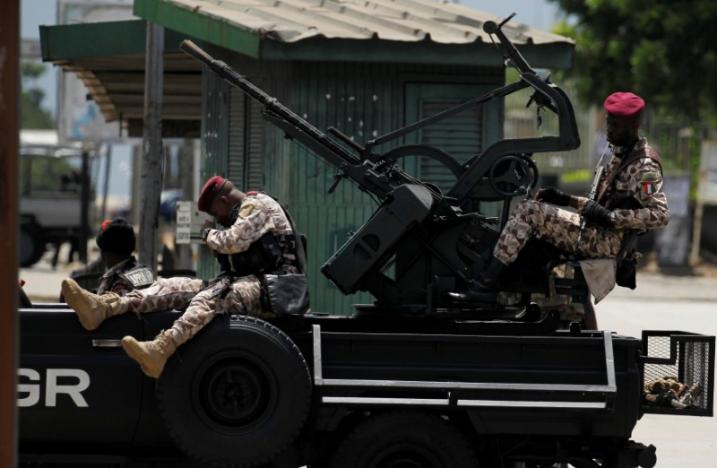
Soldiers at a number of Ivory Coast's military bases have been firing into the air and blocking streets in several cities in protest over a pay dispute.
Heavy gunfire was heard in the commercial capital Abidjan, causing panic among residents.
The unrest began after a spokesman for the soldiers announced on Thursday that they had dropped their pay demands.
The mutineers, most of whom are former rebels, are revolting over delayed bonuses promised by the government.
In January, they forced the government into paying them about $8,000 (£6,200). They were due to receive a further payment this month.
On Friday, shots were fired in the air at the bases in Abidjan, Bondoukou in the east, Bouaké in the centre, and Korhogo in the north.
The BBC's Tamasin Ford reports that she witnessed a scene of panic in Plateau, Abidjan's financial district.
It is believed the mutineers were firing blanks.
In response, elite Republican Guard troops in Abidjan fired warning shots that pushed the mutineers back the inside the military headquarters compound in Abidjan, Reuters reports.
About 8,000 mutineers are unhappy that they were not consulted ahead of Thursday's TV ceremony in which their spokesman said the pay demand had been dropped.
Reacting to the spreading unrest, President Alassane Ouattara held an emergency meeting of the country's security council.
The mutiny raised fears of a resurgence of the violence seen during Ivory Coast's 10-year civil war, which ended in 2011.
Some of the mutineers were thought to be former rebels who joined the army after the conflict.
Source : http://www.bbc.com/news/world-africa-39895581
Heavy gunfire was heard in the commercial capital Abidjan, causing panic among residents.
The unrest began after a spokesman for the soldiers announced on Thursday that they had dropped their pay demands.
The mutineers, most of whom are former rebels, are revolting over delayed bonuses promised by the government.
In January, they forced the government into paying them about $8,000 (£6,200). They were due to receive a further payment this month.
On Friday, shots were fired in the air at the bases in Abidjan, Bondoukou in the east, Bouaké in the centre, and Korhogo in the north.
The BBC's Tamasin Ford reports that she witnessed a scene of panic in Plateau, Abidjan's financial district.
It is believed the mutineers were firing blanks.
In response, elite Republican Guard troops in Abidjan fired warning shots that pushed the mutineers back the inside the military headquarters compound in Abidjan, Reuters reports.
About 8,000 mutineers are unhappy that they were not consulted ahead of Thursday's TV ceremony in which their spokesman said the pay demand had been dropped.
Reacting to the spreading unrest, President Alassane Ouattara held an emergency meeting of the country's security council.
The mutiny raised fears of a resurgence of the violence seen during Ivory Coast's 10-year civil war, which ended in 2011.
Some of the mutineers were thought to be former rebels who joined the army after the conflict.
Source : http://www.bbc.com/news/world-africa-39895581
Ransomware infections reported worldwide

A massive ransomware campaign appears to have infected a number of organisations around the world.
Computers in thousands of locations have apparently been locked by a program that demands $300 (£230) in Bitcoin.
There have been reports of infections in more than 70 countries, including the UK, US, China, Russia, Spain, Italy and Taiwan.
Many security researchers are linking the incidents together.
The UK's National Health Service (NHS) was also hit by a ransomware outbreak on the same day and screenshots of the WannaCry program were shared by NHS staff.
One cyber-security researcher tweeted that he had detected many thousands of cases of the ransomware - known as WannaCry and variants of that name - around the world.
"This is huge," said Jakub Kroustek at Avast.
Another, at cyber-security firm Kaspersky, said that the ransomware had been spotted cropping up in 74 countries and that the number was still growing.
There were a number of reports that Russia had seen more infections than any other single country.
Several experts monitoring the situation have linked the infections to vulnerabilities released by a group known as The Shadow Brokers, which recently claimed to have dumped hacking tools stolen from the US National Security Agency (NSA).
A patch for the vulnerability was released by Microsoft in March, but many systems may not have had the update installed.
Some security researchers have pointed out that the infections seem to be deployed via a worm - a program that spreads by itself between computers.
'Turn off PCs'
A number of Spanish firms were among the apparent victims elsewhere in Europe.
Telecoms giant Telefonica said in a statement that it was aware of a "cybersecurity incident" but that clients and services had not been affected.
Power firm Iberdrola and utility provider Gas Natural were also reported to have suffered from the outbreak.
There were reports that staff at the firms were told to turn off their computers.
At least one local authority in Sweden also appears to have been a victim.
"We have around 70 computers that have had a dangerous code installed," the mayor of Timra, a town to the north of Stockholm, told the Reuters news agency.
Explaining the global ransomware outbreak
Unlike many other malicious programs, this one has the ability to move around a network by itself. Most others rely on humans to spread by tricking them into clicking on an attachment harbouring the attack code.
By contrast, once WannaCry is inside an organisation it will hunt down vulnerable machines and infect them too. This perhaps explains why its impact is so public - because large numbers of machines at each victim organisation are being compromised.
Explaining the global ransomware outbreak
Unlike many other malicious programs, this one has the ability to move around a network by itself. Most others rely on humans to spread by tricking them into clicking on an attachment harbouring the attack code.
By contrast, once WannaCry is inside an organisation it will hunt down vulnerable machines and infect them too. This perhaps explains why its impact is so public - because large numbers of machines at each victim organisation are being compromised.
Source : http://www.bbc.com/news/technology-39901382
Computers in thousands of locations have apparently been locked by a program that demands $300 (£230) in Bitcoin.
There have been reports of infections in more than 70 countries, including the UK, US, China, Russia, Spain, Italy and Taiwan.
Many security researchers are linking the incidents together.
The UK's National Health Service (NHS) was also hit by a ransomware outbreak on the same day and screenshots of the WannaCry program were shared by NHS staff.
One cyber-security researcher tweeted that he had detected many thousands of cases of the ransomware - known as WannaCry and variants of that name - around the world.
"This is huge," said Jakub Kroustek at Avast.
Another, at cyber-security firm Kaspersky, said that the ransomware had been spotted cropping up in 74 countries and that the number was still growing.
There were a number of reports that Russia had seen more infections than any other single country.
Several experts monitoring the situation have linked the infections to vulnerabilities released by a group known as The Shadow Brokers, which recently claimed to have dumped hacking tools stolen from the US National Security Agency (NSA).
A patch for the vulnerability was released by Microsoft in March, but many systems may not have had the update installed.
Some security researchers have pointed out that the infections seem to be deployed via a worm - a program that spreads by itself between computers.
'Turn off PCs'
A number of Spanish firms were among the apparent victims elsewhere in Europe.
Telecoms giant Telefonica said in a statement that it was aware of a "cybersecurity incident" but that clients and services had not been affected.
Power firm Iberdrola and utility provider Gas Natural were also reported to have suffered from the outbreak.
There were reports that staff at the firms were told to turn off their computers.
At least one local authority in Sweden also appears to have been a victim.
"We have around 70 computers that have had a dangerous code installed," the mayor of Timra, a town to the north of Stockholm, told the Reuters news agency.
Explaining the global ransomware outbreak
Unlike many other malicious programs, this one has the ability to move around a network by itself. Most others rely on humans to spread by tricking them into clicking on an attachment harbouring the attack code.
By contrast, once WannaCry is inside an organisation it will hunt down vulnerable machines and infect them too. This perhaps explains why its impact is so public - because large numbers of machines at each victim organisation are being compromised.
Explaining the global ransomware outbreak
Unlike many other malicious programs, this one has the ability to move around a network by itself. Most others rely on humans to spread by tricking them into clicking on an attachment harbouring the attack code.
By contrast, once WannaCry is inside an organisation it will hunt down vulnerable machines and infect them too. This perhaps explains why its impact is so public - because large numbers of machines at each victim organisation are being compromised.
Source : http://www.bbc.com/news/technology-39901382
